† Entry 60
Updated
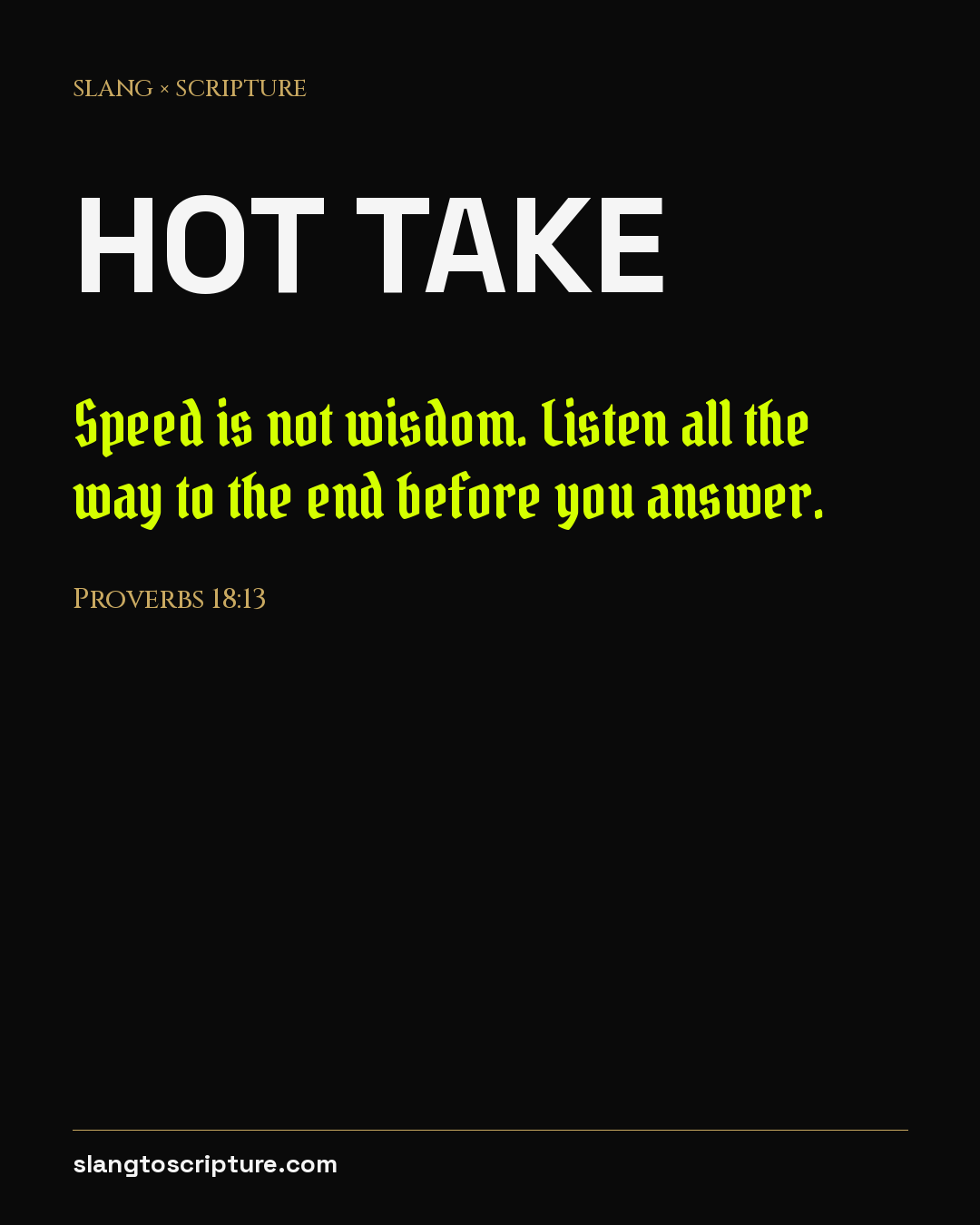
Hot Take
A strong opinion fired off fast, usually built to provoke and rarely thought through.
† A biblical perspective
Speed is not wisdom. Listen all the way to the end before you answer.
“He who answers before he hears, that is folly and shame to him.”
† Proverbs 18:13 · WEB
† The turn
Hot takes reward whoever talks first. Proverbs rewards whoever listens first. Jesus asked people questions, let them finish, and answered what they actually meant. That kind of attention is rarer than any opinion, and it is what changes people.
Never had this explained? Start here →† Do this today
Before you post or reply to anything today, read or hear the whole thing, then wait one hour.
† Pray this
Jesus, slow my mouth down and open my ears.
† Used in a sentence
His hot take was that the movie was overrated, and he had not even watched the ending.
† In context
In the passage
Proverbs 18 is a cluster of short sayings about speech, pride and relationships. Verse 2 says “A fool has no delight in understanding, but only in revealing his own opinion.” Verse 13 warns against answering before hearing, and verse 17 adds that the first person to make a case only seems right until someone else asks questions.
Why it connects
Cambridge Dictionary describes a hot take as a strong opinion that has not been carefully thought about. That is close to what Proverbs 18 calls folly: delighting in your own opinion more than in understanding, and answering before you have heard the whole story.
Where the comparison stops
Proverbs is not against opinions or quick answers. Some situations need a fast response, and holding a strong view is not a sin. The warning is about answering without listening, especially when the goal is attention rather than truth.
† Questions people ask
What is a hot take?
A hot take is a strong, often provocative opinion, usually shared online, that has not been carefully thought through. Cambridge Dictionary notes the term is usually disapproving.
What does the Bible say about speaking too quickly?
Proverbs 18:13 calls answering before you hear “folly and shame”, and James 1:19 says to be “swift to hear, slow to speak, and slow to anger”. Listening first is treated as wisdom, not weakness.
Is it wrong to have strong opinions as a Christian?
No. Scripture is full of people with strong convictions. The question is how you form and share them: hearing people out, checking your facts and speaking in a way that builds others up instead of only stirring a reaction.
† Sources
- Cambridge Dictionary: hot take (checked 2026-11-01)
- Scripture quotations: World English Bible (WEB), public domain, from eBible.org.
† Share this term
† More on words and integrity
- No CapNo lie. I am being completely honest.
- Standing on BusinessHolding your ground. Following through. Staying true to your word.
- ReceiptsScreenshots or proof kept to expose someone later.
One term a week.
Free · no spam